Inside Alaska’s Living Ice: Exploring the Glaciers of Wrangell–St. Elias
A sponsored post with St. Elias Alpine Guides, July 2026
There are places in Alaska that feel big. And then there’s Wrangell–St. Elias, America’s largest national park at 13.2 million acres, with a landscape so vast that it reshapes your sense of scale entirely.
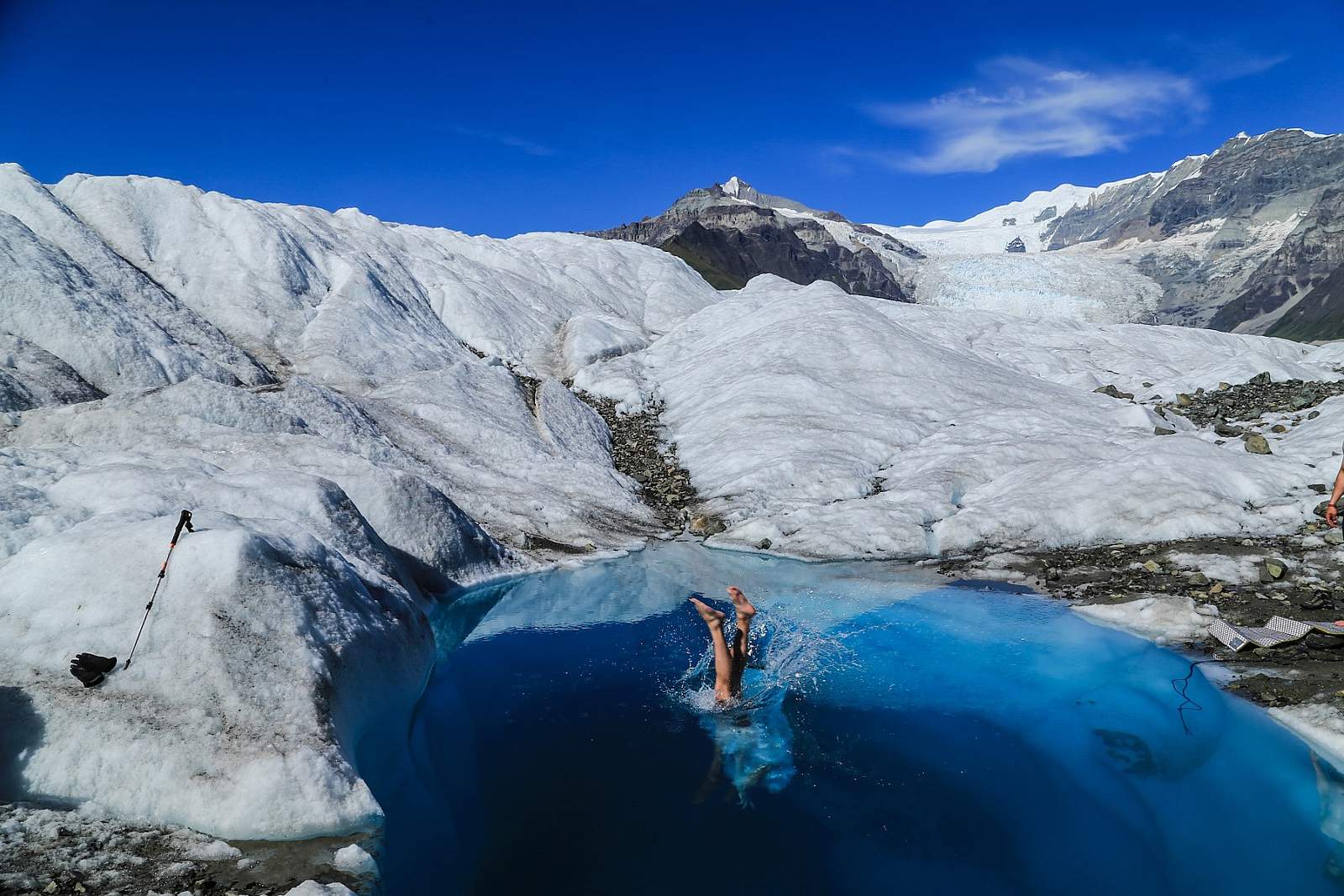
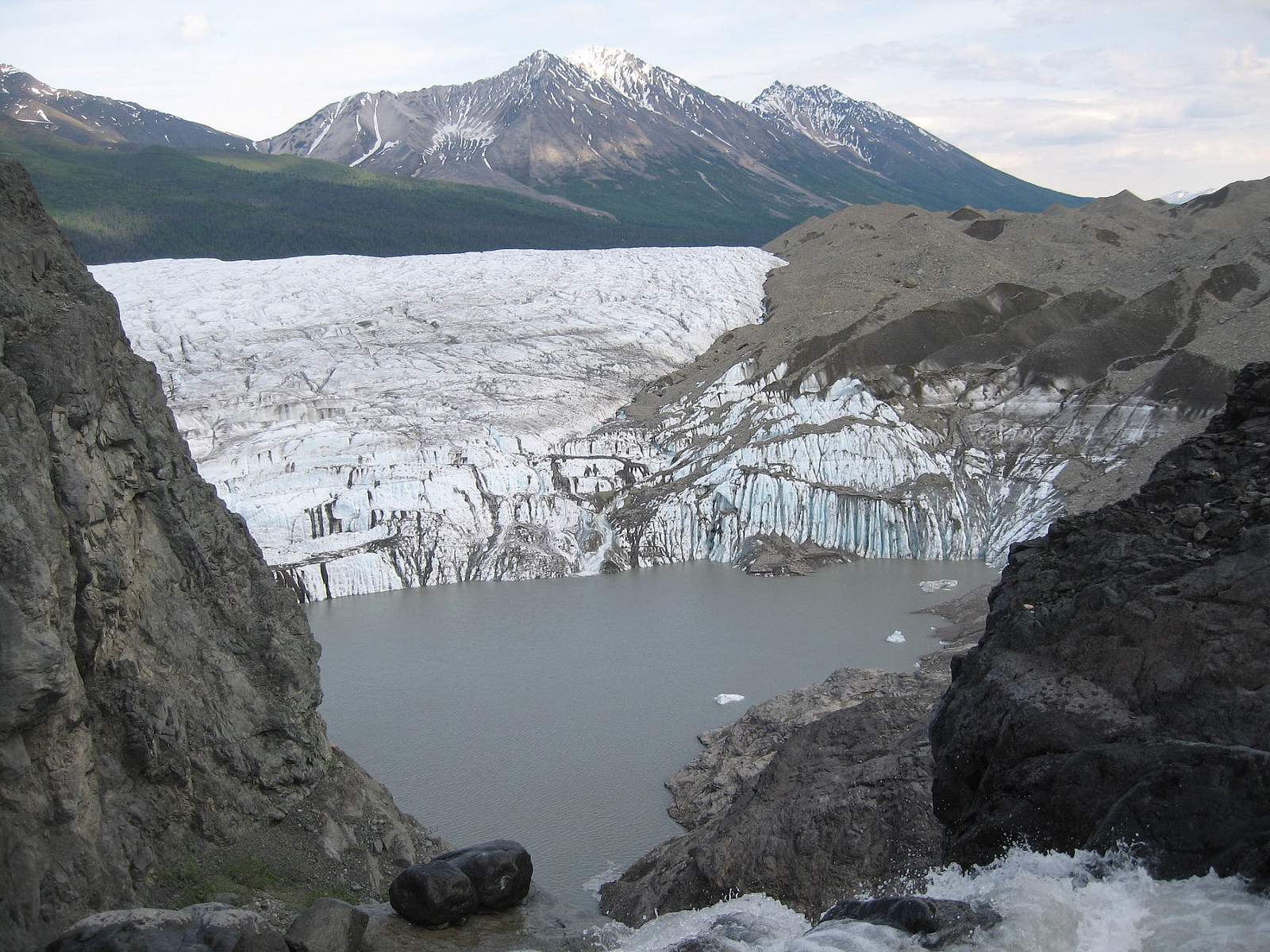
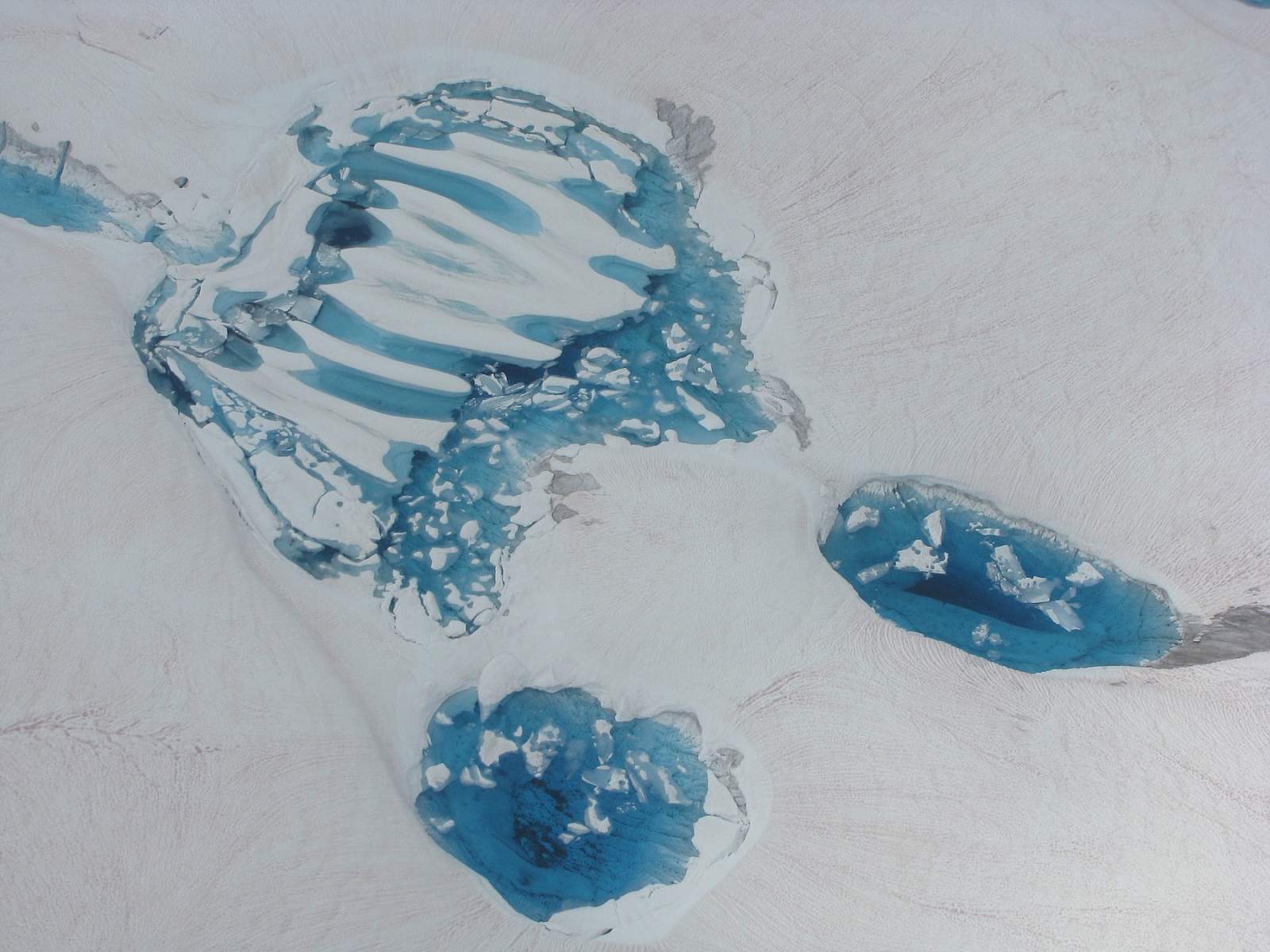
But it’s not just the sheer size of this park—7 hours east of Anchorage—that makes it special. Around 60% of Alaska’s glacier-covered terrain lies within its boundaries, and nearly one-third of the park itself is covered in glacial ice. From the massive Bagley Icefield (one of North America’s largest continuous icefields) to sprawling valley glaciers like the Root and Kennicott, this is one of the most heavily glaciated regions on earth outside of Greenland and Antarctica.
So, to appreciate this park, you first have to understand the ice.

A Landscape Built by Glaciers
“Everything here is glacial,” says Nick, a lead guide and glaciologist with St. Elias Alpine Guides, a local wilderness guiding service that has been helping visitors explore Wrangell-St. Elias for more than 40 years. “If it’s not currently covered in ice, it was—and it’s still being shaped by meltwater, sediment, and movement.”
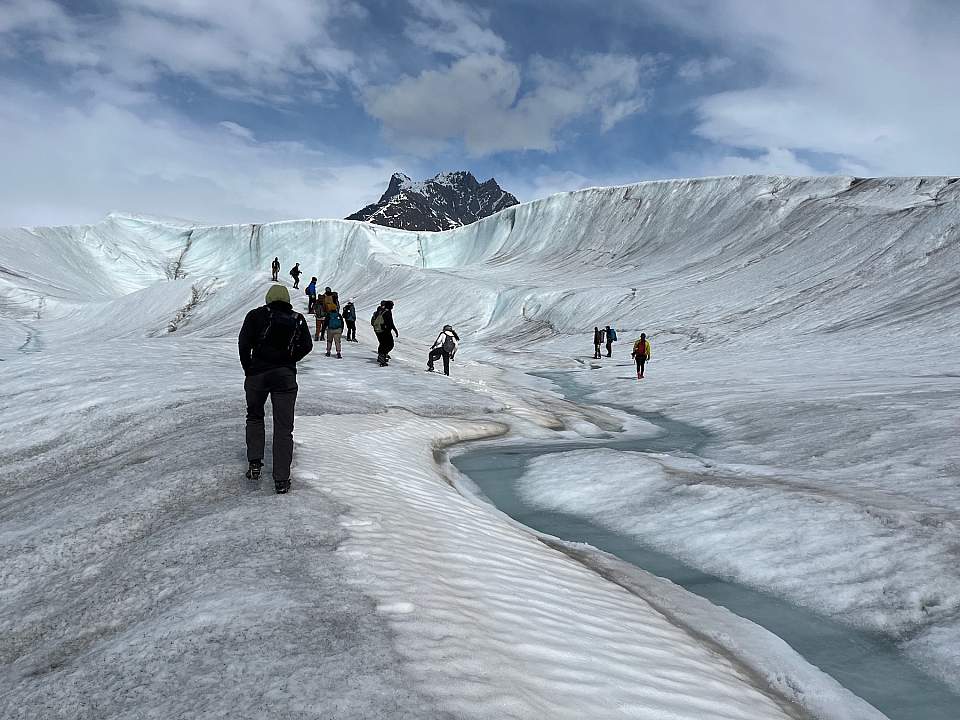
You’ll see the influence of glaciers everywhere: valleys that were carved by ancient ice, rivers that rush with glacial melt, and jagged moraines (or rock ridges) that were created by retreating glaciers. Entire ecosystems depend on the sediment-rich waters from glaciers. And the effects are far-reaching: Sedimentation pumping into the ocean and to the Copper River creates one of the world’s most prolific salmon runs.
That action may not be obvious, but it’s happening. As Nick points out, glaciers don’t just sit still; they move, carve, melt, and reshape the land in real time. You’re not just seeing a place—you’re witnessing a moment in time.
And it’s not just the ice that makes this park special—it’s the vertical drama. Mount St. Elias is the highest coastal mountain on earth, rising more than 18,000 feet from the Pacific Ocean in just 10 miles. It’s one of the steepest, longest continuous sea-to-summit vertical drops in the world. And it is absolutely gorgeous.
Still, to fully grasp how special this place is, you have to step out onto the ice.
What You’ll Experience on the Ice
Walk on a glacier here and “you realize pretty quickly that this isn’t like anything you’ve ever seen before,” says Nick. “It defies expectations.”
But it will quickly become clear that the ice is more than pretty. It’s dynamic, it’s alive, and it hits all the senses. “You hear it before you fully understand it,” says Nick. “Water moving, rocks shifting, the glacier constantly adjusting. It’s not static—it’s always changing.”
And with that realization often comes something deeper: an understanding of the glacier’s power. Glaciers are truly a force of nature that have been shaping ecosystems, rivers, and even global climate systems for millennia.
Nick describes some glacial features that surprise visitors most:
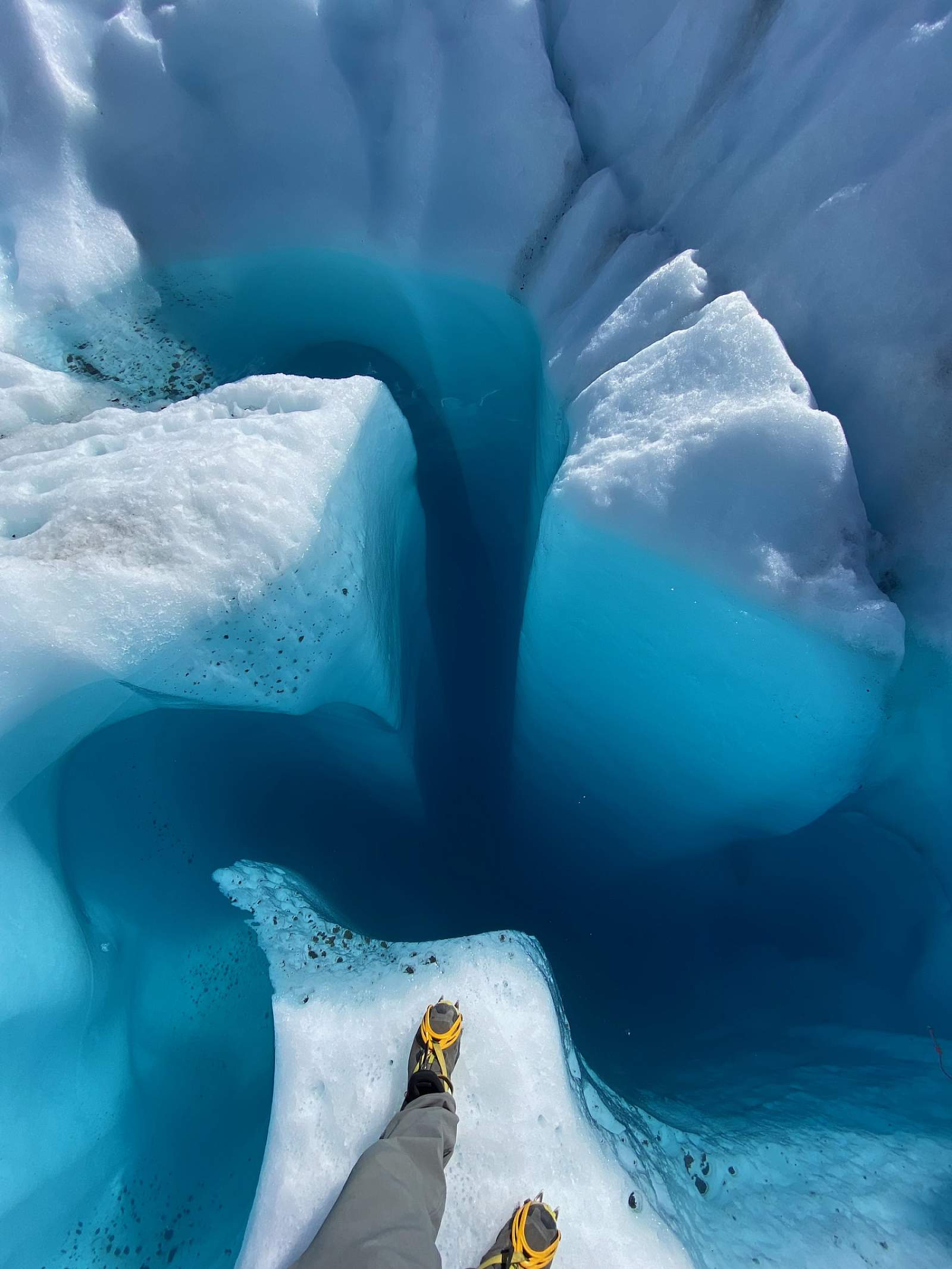
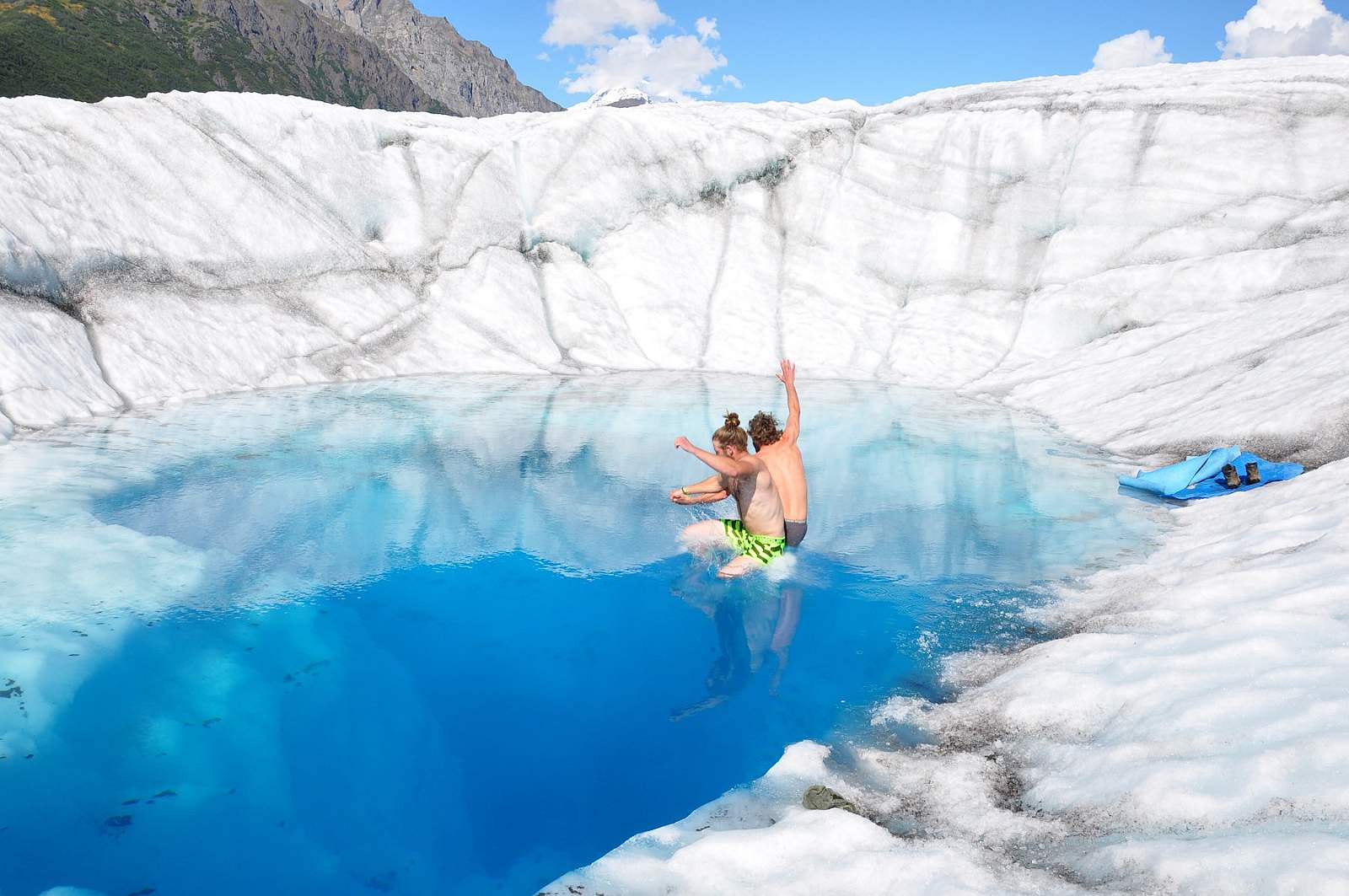
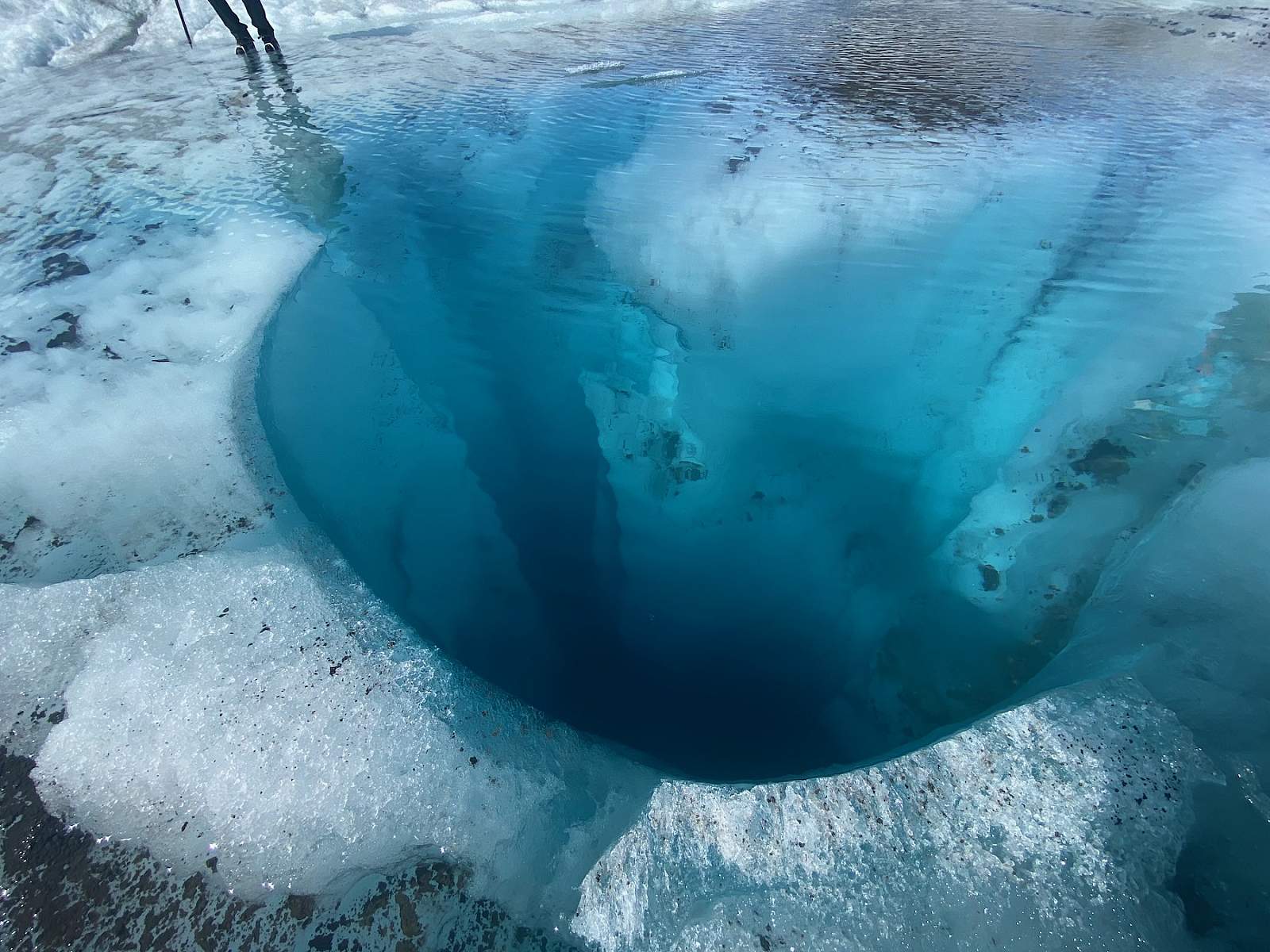
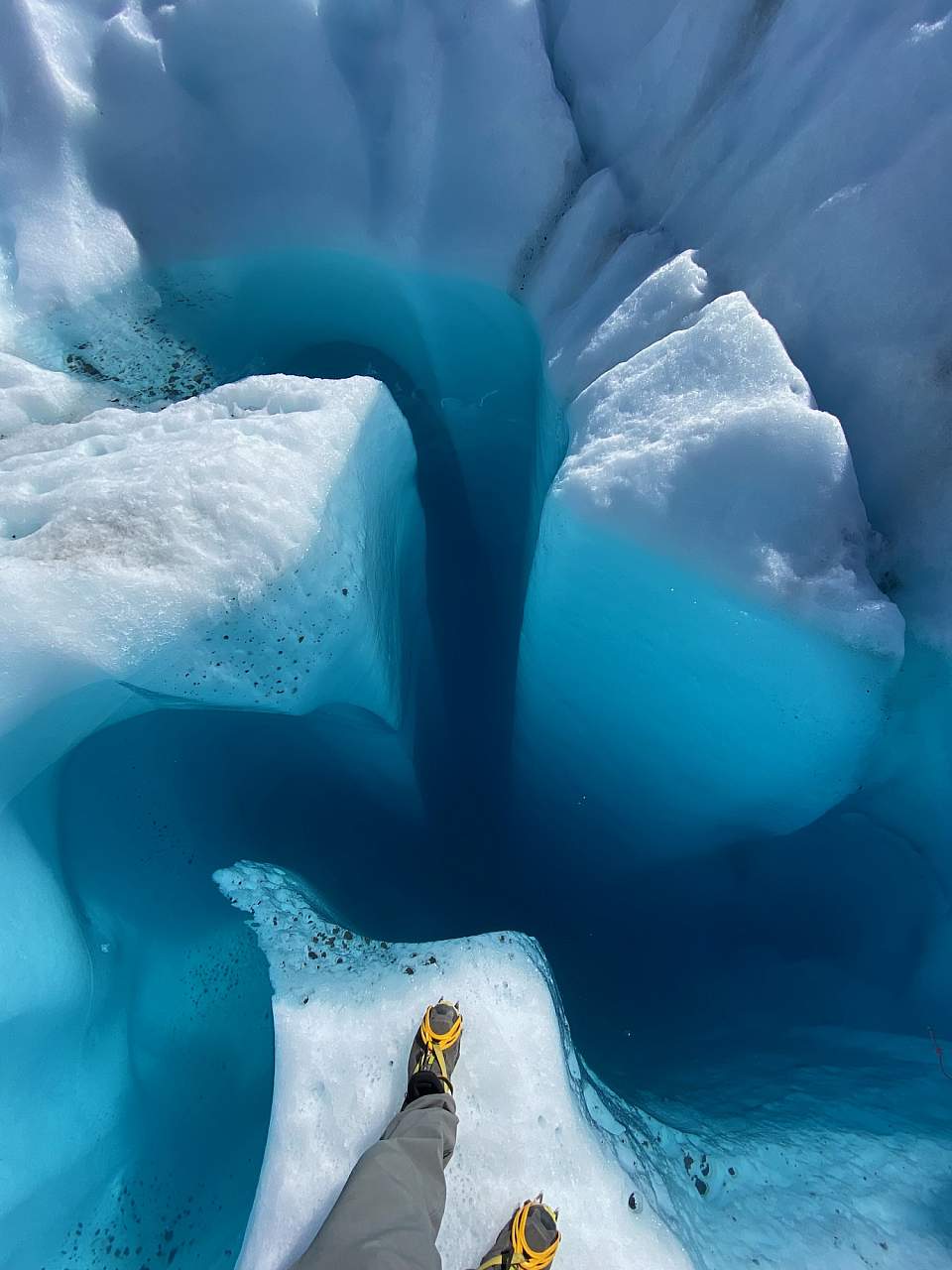
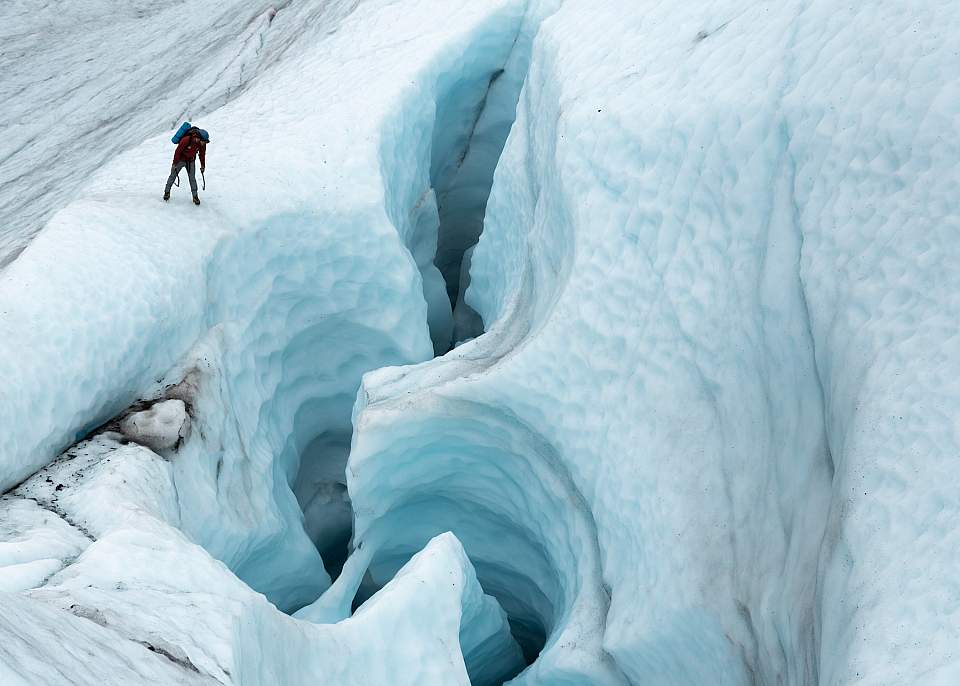
- Moulins: These vertical shafts where meltwater drills deep into the glacier are the most exciting and beautiful features, he says. Surrounded by a deep blue, some are large enough to climb into. And it’s there where you’ll find a glacier’s purest color—a luminous blue that’s almost otherworldly.
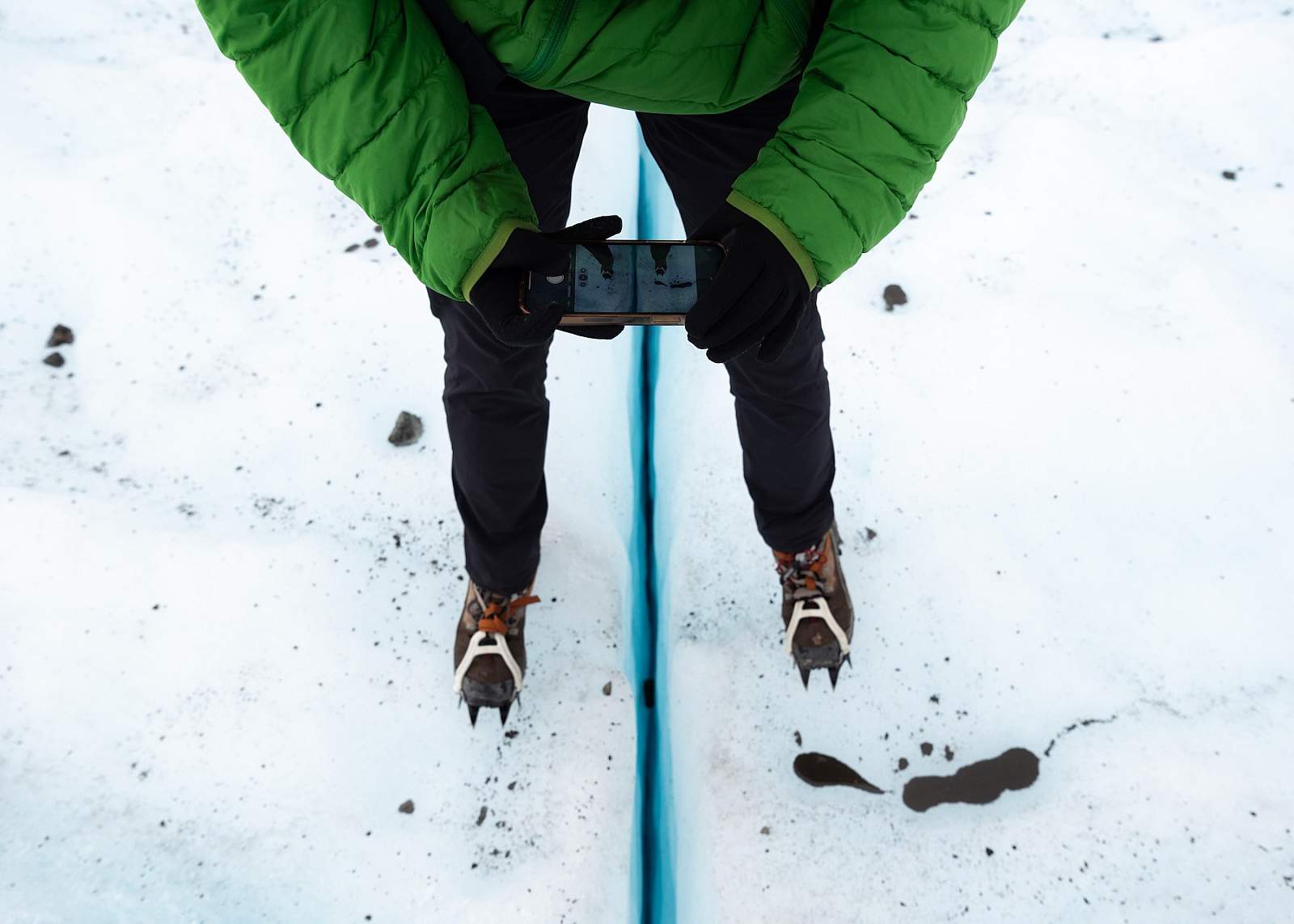
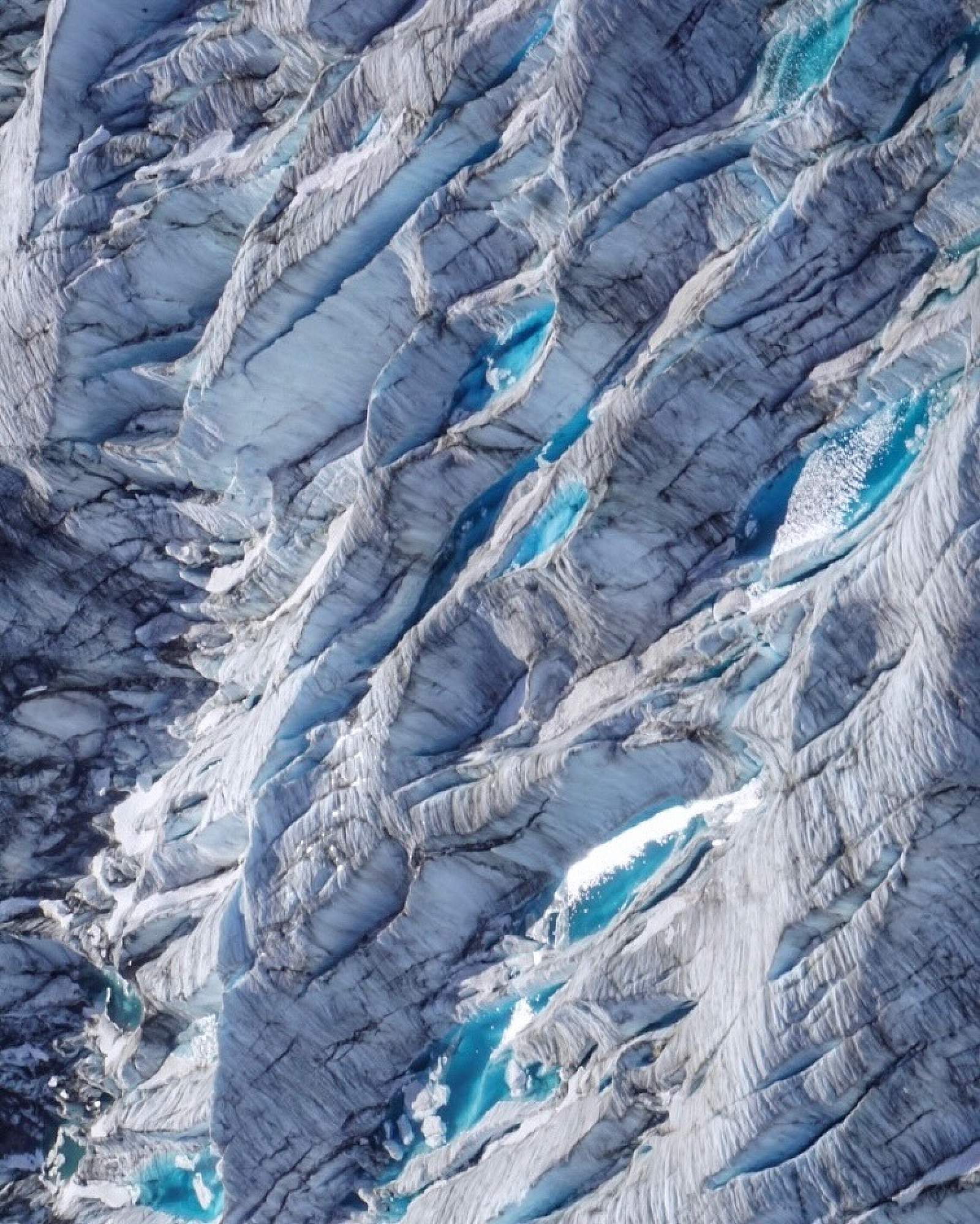
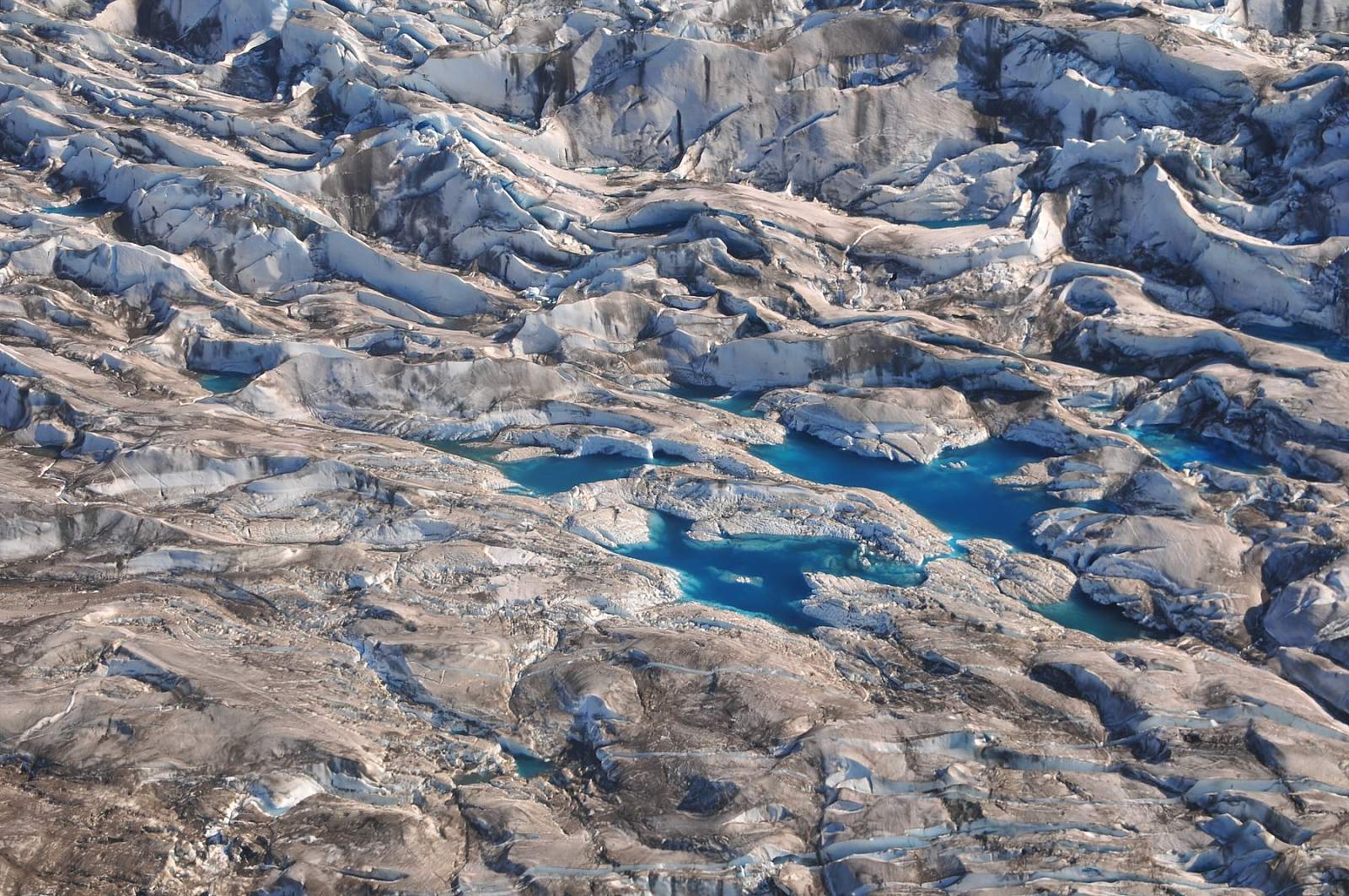
- Crevasses: A glacier’s movement forms these cracks, which are sometimes narrow, sometimes wide, and always dramatic. They hint at the powerful forces at work beneath your feet.
- Seracs and ice fins: These towering formations and sculpted ridges are created as the glacier flows over uneven terrain.
- Glacial streams: The clear, cold water of these streams rushes across the surface before disappearing into the ice below.
- Medial moraines: These bands of rock and sediment sit atop the glacier and are surprisingly alive with moss, insects, and even tiny “glacier mice” (balls of moss that slowly roll across the ice).

Ice Caves: Alaska’s Most Surreal Spaces
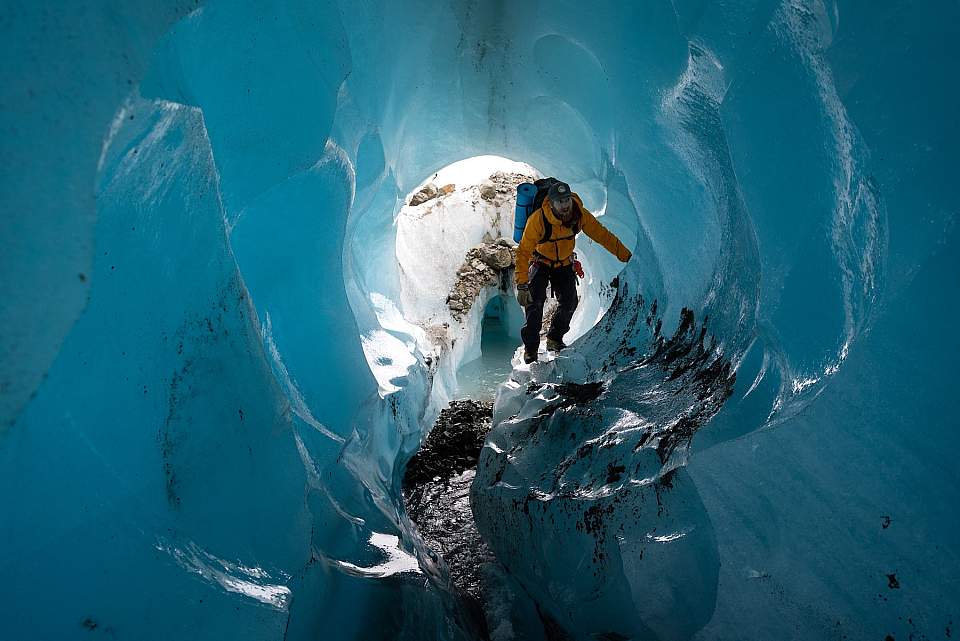
Among the most unforgettable experiences are glacier caves, formed when meltwater carves tunnels and chambers into the ice.
Some are narrow crawlspaces. Others open into massive, cathedral-like rooms with ceilings glowing an electric blue. As light filters through the dense, ancient ice, it reveals suspended rocks and layers formed over decades or centuries.
One spot currently features three caves, says Nick. One is especially large, one is wide with a loud, rushing creek, and one is a wormhole that requires crawling through on hands and knees. Inside them all, says Nick, “It’s the deepest blue you’ll ever see. But these caves actually trigger all your senses—the sound of water, the cold air, the scale of it.”
And because these caves shift and evolve throughout the summer, no two visits will be the same.
Experiencing the Glaciers
You don’t need to be a mountaineer to experience this world. St. Elias Alpine Guides offers multiple ways to immerse yourself in Alaska’s glacial landscape.
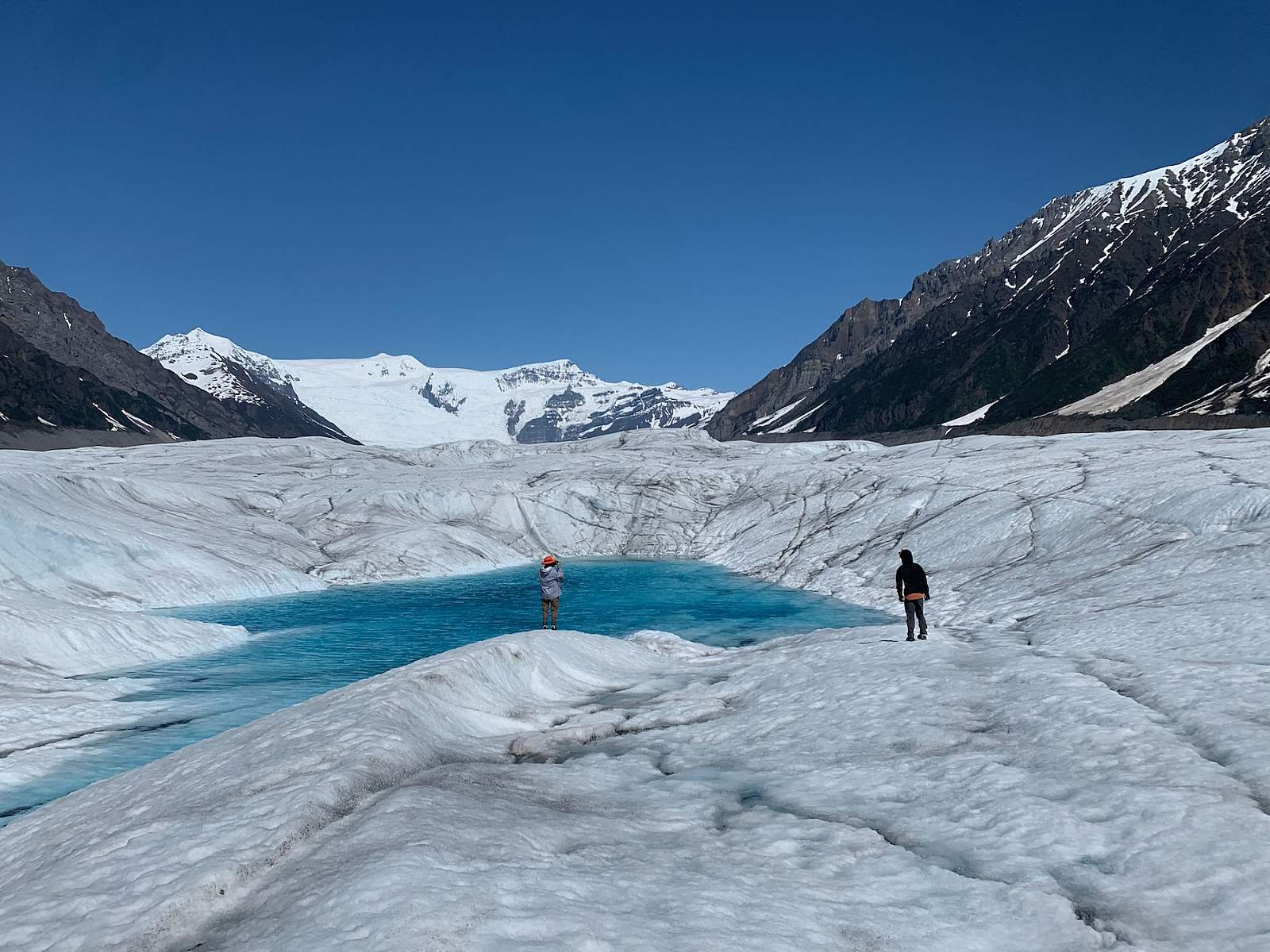
- Glacier hiking: After a scenic walk along a lateral moraine, you step directly onto the Root Glacier with crampons and safely explore features like moulins, streams, and ice formations.
- Ice climbing: Climb vertical ice walls and frozen features, guided by experienced professionals. It’s a surprisingly accessible way to try something truly unique.
- Ice cave exploration: Venture into the shifting blue interiors of the Kennicott Glacier, where each cave tells a different story.
- Rafting: Follow glacial meltwater downstream as they rush toward the Copper River, experiencing the power of these systems from a different perspective.
- Backpacking and mountaineering: For those seeking more extreme adventure and deeper immersion, multi-day trips like backpacking, basecamp hiking, or mountaineering explore remote valleys and high alpine zones shaped by ice.
Plan Your Glacier Experience
There are few places on earth where you can walk, climb, and explore glaciers that are both this accessible and this spectacular.
Whether it’s your first step onto the ice or want to experience glaciers in a new way, St. Elias Alpine Guides offers the unique opportunity to immerse yourself in these magical landscapes deeply and safely. Their expert guides know the terrain intimately and love sharing their passion so you come away with greater knowledge, inspired excitement, and unforgettable memories.
After all, glaciers shouldn’t just be something you look at. When you go with St. Elias Alpine Guides, these mystical natural treasures will take all your senses to the next level.
Photos